How places are counted, and who can book
Why a batch that looks half empty can still refuse a booking, where the number of places lives, and the controls that decide which children are eligible.
3 min read
Why a half-empty batch refuses a booking
A parent rings to say the site will not take their booking. You look at the batch and it is nowhere near full. You are both right.
The number you set is how many children can be in one session — whatever your centre calls them on screen, Students or Members or something else. It is not how many bookings the batch takes across the term.
A booking spanning eight Tuesdays takes a place in all eight. If one of those Tuesdays is full, that session alone blocks the booking, even when the other seven are half empty. One busy week in the middle of a quiet term is enough.
Where the number lives
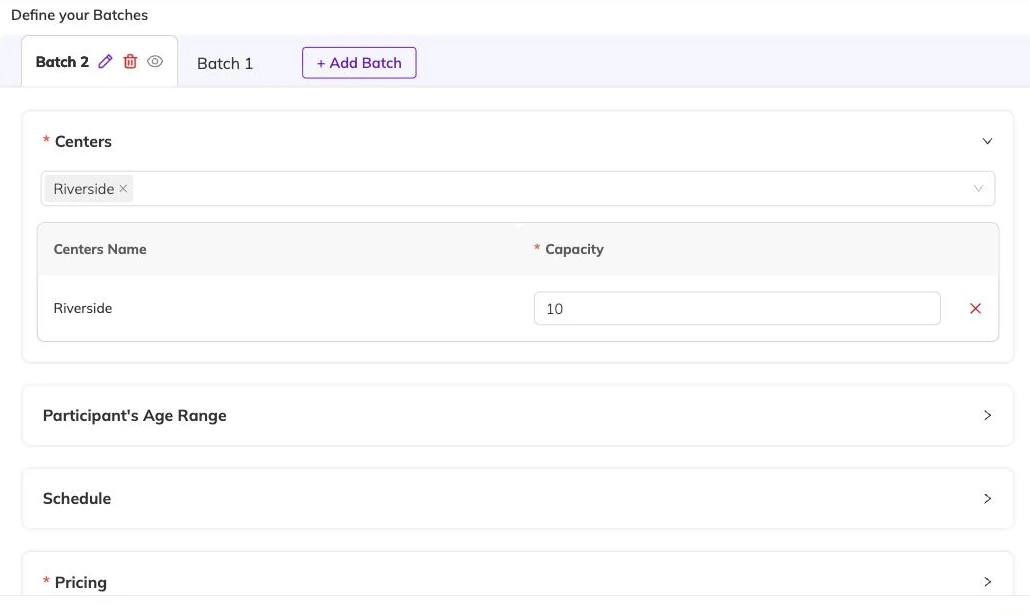
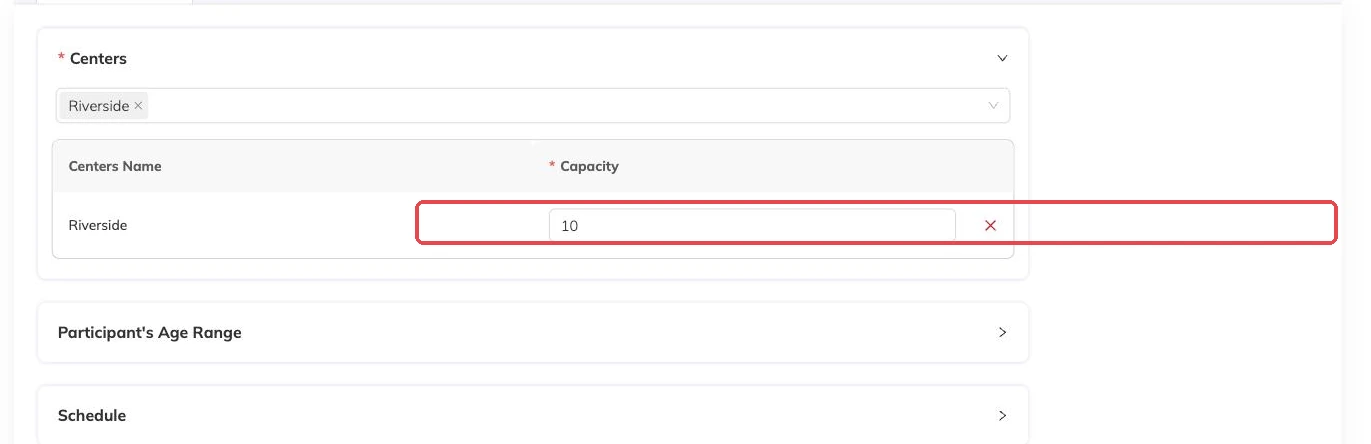
Places are set on the batch, against each centre it runs at. Two batches of the same programme at two sites carry their own numbers, which is what you want when one hall is bigger than the other. Running multiple locations covers how centres and their staff are set up.
Set it to what the room holds with the staff you have rostered. Not what you hope to sell. This is the one setting that has to match a ratio and a room, and it is the hardest one to walk back.
When a session fills
If the programme has a waitlist, the family joins it. If it does not, the booking is refused, and you get no record that anyone tried.
Waitlists are switched on per programme and can carry a limit of their own. Waitlists explains how the queue behaves when a place comes free.
If you want to know who wanted a place — for next term's planning if nothing else — enable the waitlist even when you have no expectation of clearing it.
Age ranges
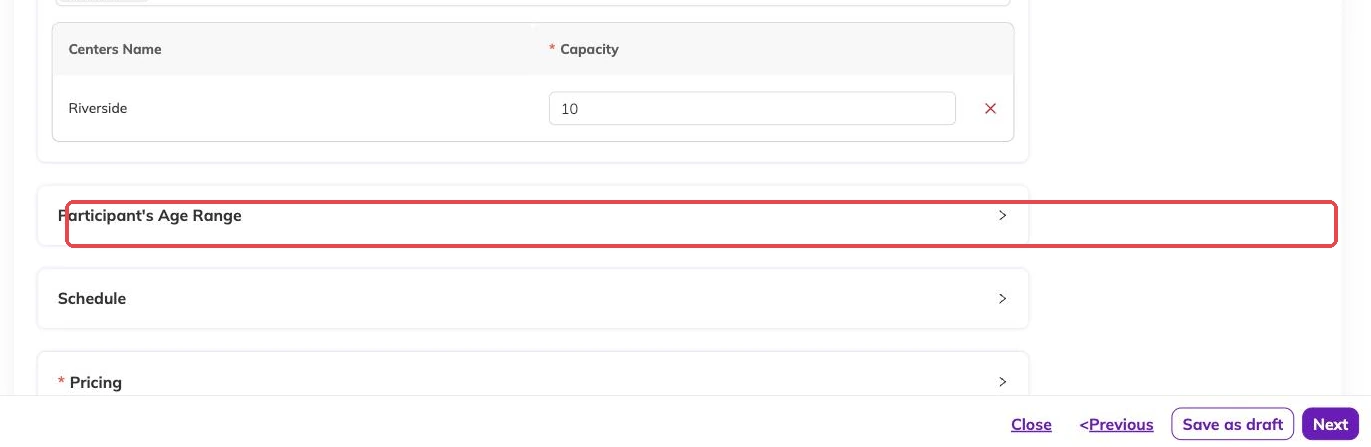
An age range is set on the batch as a minimum and a maximum, in years and months, and is worked out from the date of birth you hold for the child. A child outside the range cannot be booked into that batch.
Remember that a term has birthdays in it. If a child who turns five in November belongs in your five-plus group from September, the minimum has to allow for that.
Leave the range off where it is guidance rather than a rule. An enforced range that was meant as a suggestion generates calls from parents who cannot book a class you would have happily taken them into.
Other ways to decide who gets in
Approval and hidden batches are what you reach for when eligibility is a judgement rather than a number. An age range cannot tell you whether a child is ready for the advanced group. A person can.
- Require approval on the programme, so a booking is only confirmed once someone at your centre has looked at it.
- Hide a batch, so your team can book families into it but families cannot find it — useful for a school partnership or an invited group.
- Make a booking question compulsory, so nobody gets in without the consent or the medical detail you need on file.
Changing the numbers later
Raising capacity is uneventful. Lowering it removes nobody: bookings already made stand, so a session can sit above the number you have set until those bookings run out.
If you need fewer children in the room than are booked into it, that is a conversation with families followed by cancellations, not a settings change. Cancellations and refunds covers what a cancellation does to the place and to the invoice.
More on programmes
Activities and how they attach to programmes
Group what you run — ballet, swimming, guitar — so a parent can tell what a programme is and a report can total a subject rather than eleven programme names.
The page families book from
What families see on your booking page, what decides how a programme appears in the list, and the five reasons one is missing.
Checking what is actually running
How to see every session your batches produce across programmes, instructors and centres, and the checks worth doing there before a term opens.