Choosing recurring weekdays or fixed dates
Which batch type each kind of programme needs, and why the choice has to be right before the first family books.
3 min read
The one batch setting that hardens
Most of a batch can be argued with later. This cannot. A batch is either recurring or fixed-date, and once bookings exist the two are not interchangeable.
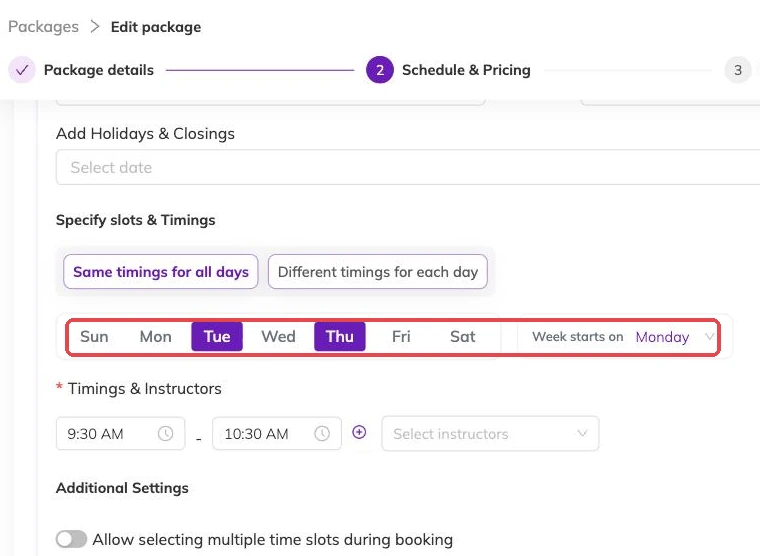
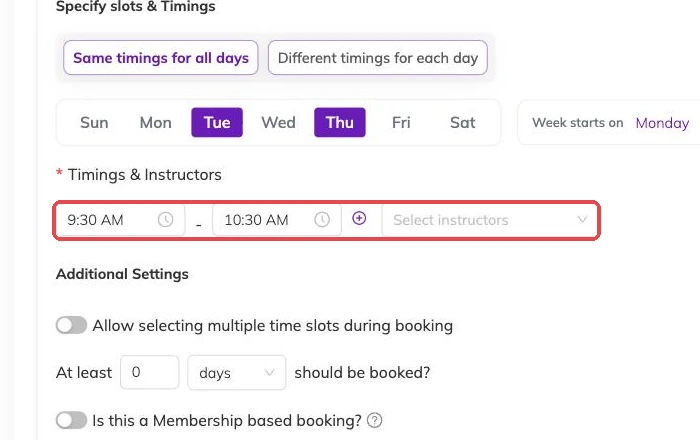
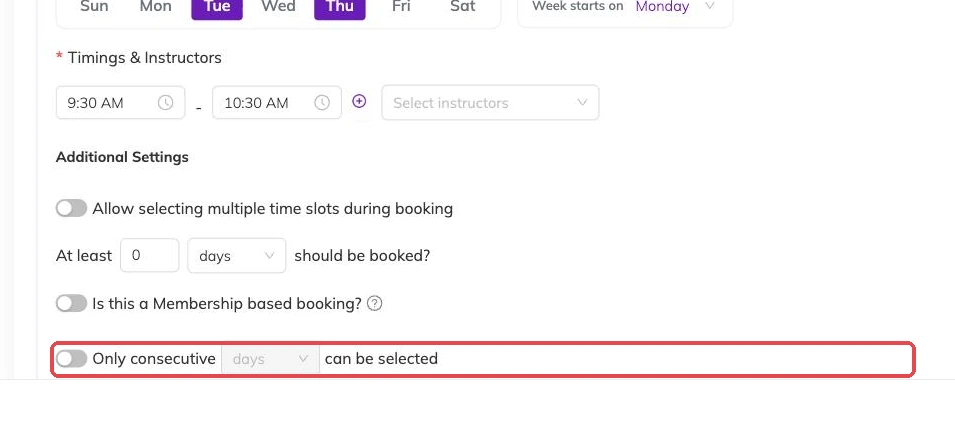
A recurring batch repeats on the weekdays you choose, between a start date and an end date. Tuesdays and Thursdays, 4pm to 5pm, September to December: every session in between comes from that.
A fixed-date batch runs on the dates you list, each with its own time. Nothing is generated. The batch is exactly those dates.
Downstream they are the same thing. Places, waitlists, attendance and invoices do not care which type produced the session.
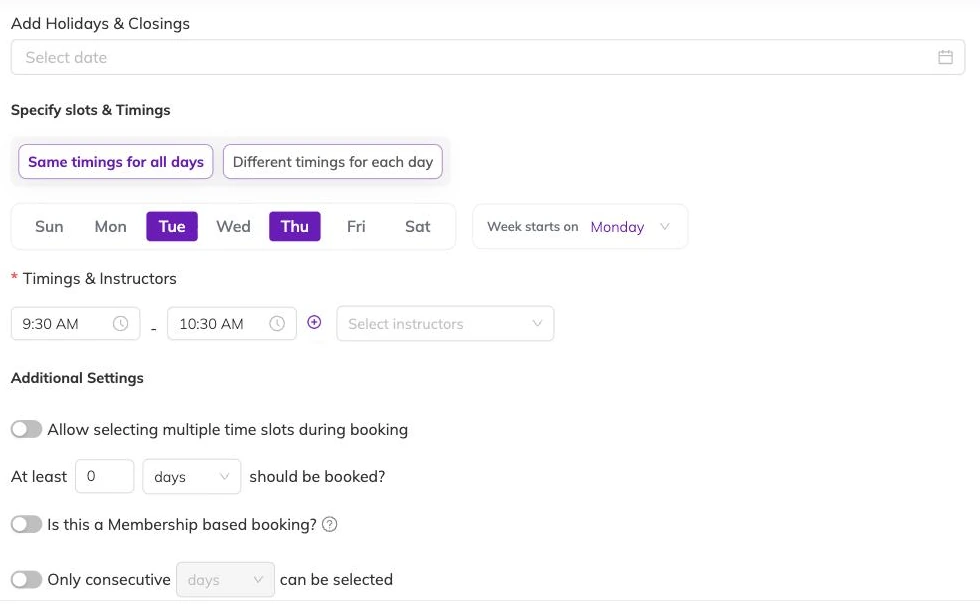
Recurring, for anything with a weekly rhythm
Recurring batches let you take dates out — half-term, a bank holiday, the week the hall is booked for something else. Do that while the batch is a draft wherever you can. A session removed afterwards is a session someone has already paid to hold a place in.
- Term-time weekly clubs.
- Ongoing dance, music or swimming classes with no natural end.
- Anything you would describe to a parent as "every Tuesday".
- Programmes that follow the school term and pause for the same closures each year.
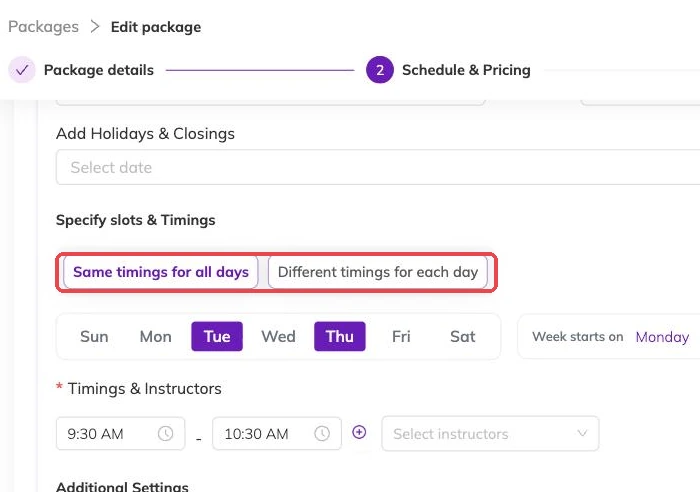
Fixed dates, for anything irregular
The test: if you are building a recurring batch and then deleting half the sessions out of it, you wanted fixed dates.
- Holiday camps across one specific week.
- One-day workshops and masterclasses.
- A series that skips about — three Saturdays this month, two next.
- Taster sessions on scattered dates.
- Anything where the dates themselves are what families are buying.
What behaves the same either way
Capacity is counted per session in both. A booking across eight Tuesdays takes a place in all eight, and one full Tuesday is enough to stop it.
Waitlists behave the same and are switched on for the programme rather than the batch. Cancelling releases places immediately in both types, so a family can cancel and re-book the same dates without waiting for anything to clear. Cancellations and refunds covers what that does to their invoice.
Pricing attaches the same way too. The batch type does not limit how you charge for it.
If you chose wrong
There is no clean switch. The practical fix is to build the correct batch alongside the wrong one, stop new bookings landing in the wrong one, and move families across yourself.
Because cancelling releases places immediately, you can cancel a family and re-book them on the same dates in the new batch in one sitting. Read Cancellations and refunds first: the money does not move as tidily as the places do. An invoice is cancelled unless something has been paid against it, in which case it comes off your outstanding list instead.
One programme can hold both
Batches are independent of each other, so one programme can run a recurring batch through term and a fixed-date batch across the holidays. Families see them as choices on the same page: one description, several ways in. It also saves you maintaining the same description twice.
More on programmes
Activities and how they attach to programmes
Group what you run — ballet, swimming, guitar — so a parent can tell what a programme is and a report can total a subject rather than eleven programme names.
The page families book from
What families see on your booking page, what decides how a programme appears in the list, and the five reasons one is missing.
Checking what is actually running
How to see every session your batches produce across programmes, instructors and centres, and the checks worth doing there before a term opens.